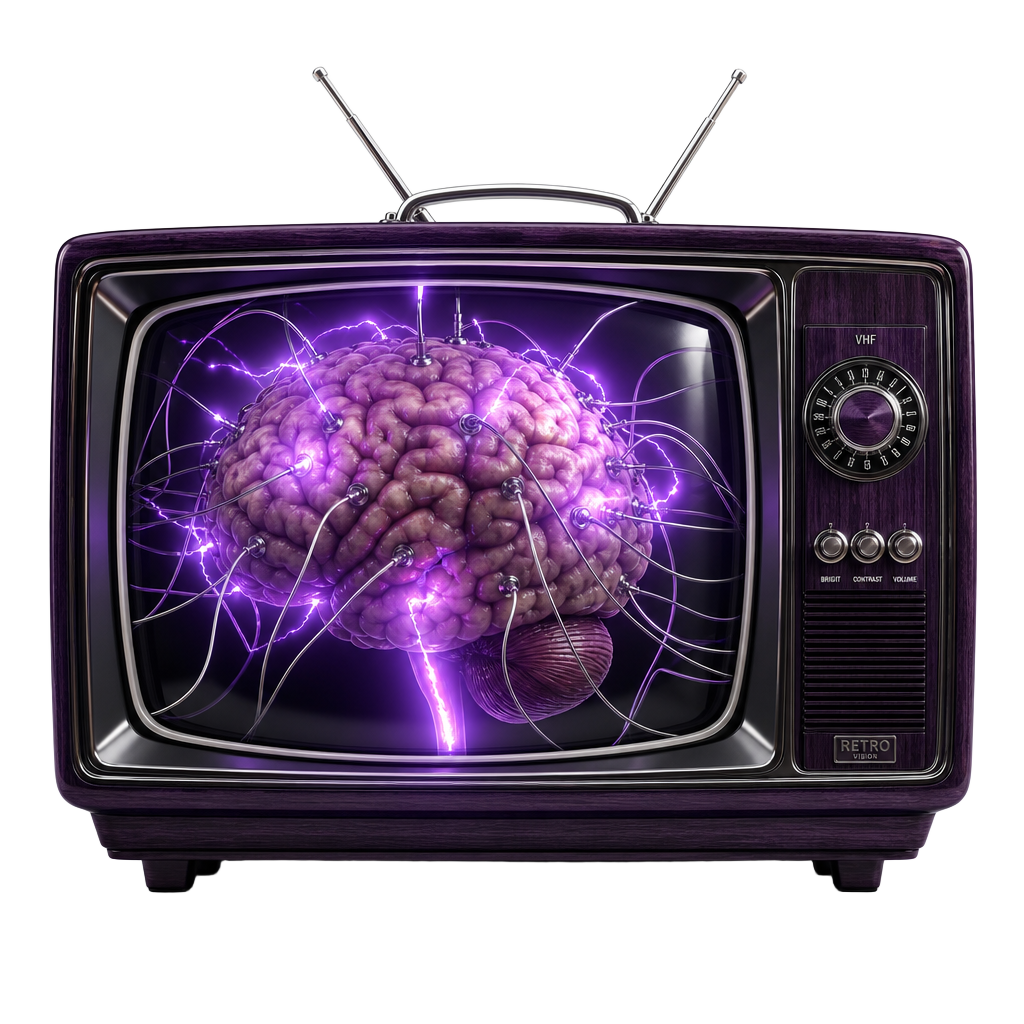
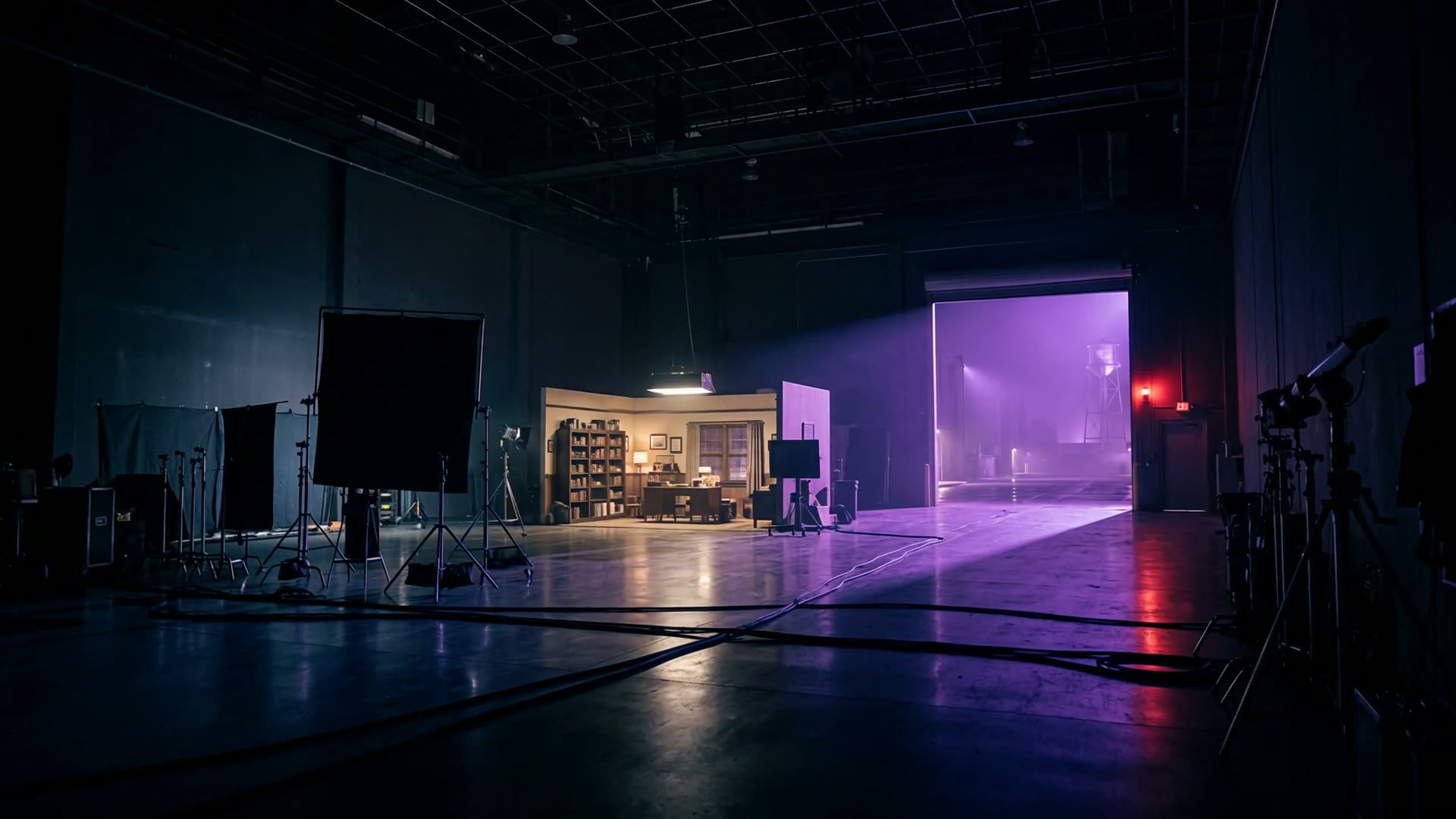
The lot you drove through to reach this page looks like one long camera move. It is not. It is seven clips, and the joins are hiding in plain sight.
The trick
Hitchcock's Rope is famous for being one continuous shot, and equally famous for not really being one. He concealed his cuts by pushing the camera into the back of someone's jacket, so the frame went dark and the next reel began on that same darkness.
We made the same deal with the audience. The camera drives down the street. A grip truck crosses in front of the lens, and for a moment all you can see is the blank white side of its box. That is where one clip ends and the next begins. Other times a painted sky rolls past on wheels and fills the frame instead.
It buys something better than a stunt. Each building sits between two hidden cuts, so we can add a new department later without reshooting the ones on either side of it.
Measuring instead of squinting
A seam either works or it does not, and your eye is a poor judge of something it already expects to see, so we measured every join. Frames on either side of a hidden cut line up to a fraction of a pixel, and sound across every join sits within a fifth of a decibel. Each building stops on the frame we approved, verified rather than assumed.
Seams are only half the job. A cut can pass every test and still be wrong, because the numbers describe the join and not the action crossing it. A truck has to enter and leave going the same way, whatever the numbers say. So we check the staging as carefully as the seam. A clean seam is not a clean cut, and knowing the difference is most of the work.
Phones
A widescreen film on an upright phone, cropped to fill the screen, preserves only about a quarter of the picture. Three quarters of every shot gets discarded, usually including the subject of the shot itself.
So the phone version is its own cut. The crop moves with the action, the way a telecine operator used to do it by hand. We work out where to point it by reading each frame for where the detail and the light sit, then ease it across so it never moves like a machine.
Why bother
Because the other option was a menu. A studio that makes films ought to be able to put you in a car and drive you down its own street. Every reason not to, the cost, the bandwidth, the shape of a phone, turned out to be a craft problem rather than a budget one.
The same standard goes on client work. The rest of the slate is in the Prop House, the tools behind it are in the Art Department, and if you want something made this way the Gate House reaches the director.